
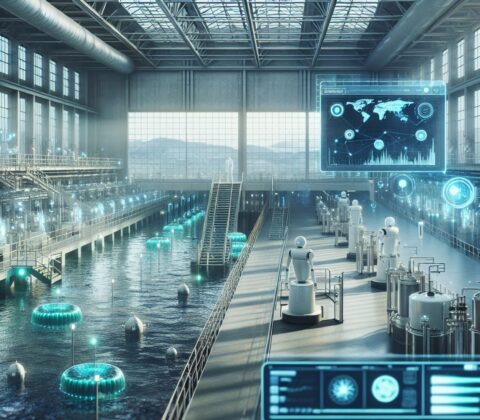
The future of automated wastewater treatment with AI and IoT solutions
Modern technology brings fresh, innovative solutions to various sectors, and wastewater treatment is no exemption. One area currently undergoing substantial transformation is wastewater processing, thanks to Artificial Intelligence (AI) and the Internet of Things (IoT).
Introduction to AI and IoT
AI refers to computer systems performing tasks that typically require human intelligence, like learning and problem-solving. IoT, on the other hand, connects numerous devices over the internet, allowing them to interact and exchange data. The integration of AI and IoT in industries optimizes operations and heightens efficiency.
AI and IoT in Wastewater Treatment
In wastewater treatment, AI and IoT merge to automate the sector. AI uses data from the IoT devices to make real-time decisions, controlling the treatment process without constant human intervention. The result is an efficient system capable of optimizing resource utilization, minimizing errors, and increasing the productivity of treatment plants.
This tech-revolution goes beyond just automation. It provides a palette of advantages that promise to redefine the work environment in treatment plants, opening new opportunities for progressiveness and sustainability.
Rise in Efficiency and Productivity
AI and IoT simplify the complex process of wastewater treatment, boosting efficiency. IoT devices monitor and regulate flows, while AI processes the collected data to make insightful decisions, thus increasing productivity.
Improvement in Resource Utilization
IoT sensors allow for accurate data gathering on water quality and the performance of treatment systems. AI then processes this data, providing useful predictions and recommendations for optimal resource utilization.
Reduction in Errors
Human intervention often results in errors. AI and IoT reduce human involvement, helping to minimize these errors and resulting in a smoother, more streamlined operation.
Future Trends in Automated Wastewater Treatment
We expect significant advancements in wastewater treatment. The integration of AI and IoT solutions will result in the future automated wastewater treatment, offering a robust foundation for technological developments.
Advanced Data Analysis
AI’s capacity to analyze massive data sets will be crucial. Advanced data analytics can predict issues in the system before they occur, reducing maintenance costs and downtime.
Cloud-Based Operations
Cloud computing will play an essential role in future operations. Storing data in the cloud allows for real-time checks and control of plant performance from anywhere, offering considerable flexibility.
Integration of Advanced Technologies
Newer technologies may join AI and IoT to further enhance wastewater treatment. Technologies like Machine Learning and Blockchain have the potential to augment data security and predictive capabilities.
Advantages and Disadvantages
As with any innovation, AI and IoT bring both benefits and challenges to wastewater treatment.
Advantages
Beyond increased productivity and efficiency, automated systems also provide more accurate predictions and facilitate proactive maintenance. Moreover, they offer a scalable solution and more control over operations, reducing waste and improving sustainability.
Disadvantages
On the downside, integrating AI and IoT into operations require significant investment. There is also the disadvantage of limited skills. Not all workers are proficient in AI-related technologies, necessitating continuous training and potentially additional hire of skilled personnel. Lastly, dependency on internet technologies opens systems to potential security breaches.
Final Thoughts
Despite the challenges, it’s clear that AI and IoT are set to revolutionize wastewater treatment. With advanced data analysis, greater operational control, and increased efficiency, we can expect a thriving, modern, and efficient wastewater treatment industry. It’s an exciting turn, promising significant progress in service delivery and environmental sustainability, setting a precedence for other sectors to follow.
The future automated wastewater treatment is waiting, and it’s looking brighter, smarter, and more efficient than ever before.
Comments are Disabled