Ion exchange technology for water conditioning
Defining Ion Exchange Technology
Ion Exchange Technology is an effective system used to purify and treat water. It is a chemical reaction method where undesirable dissolved ions in the water get replaced with more desirable ions. This method is common in remedying water hardness and other water impurities.
The Working Principle of Ion Exchange
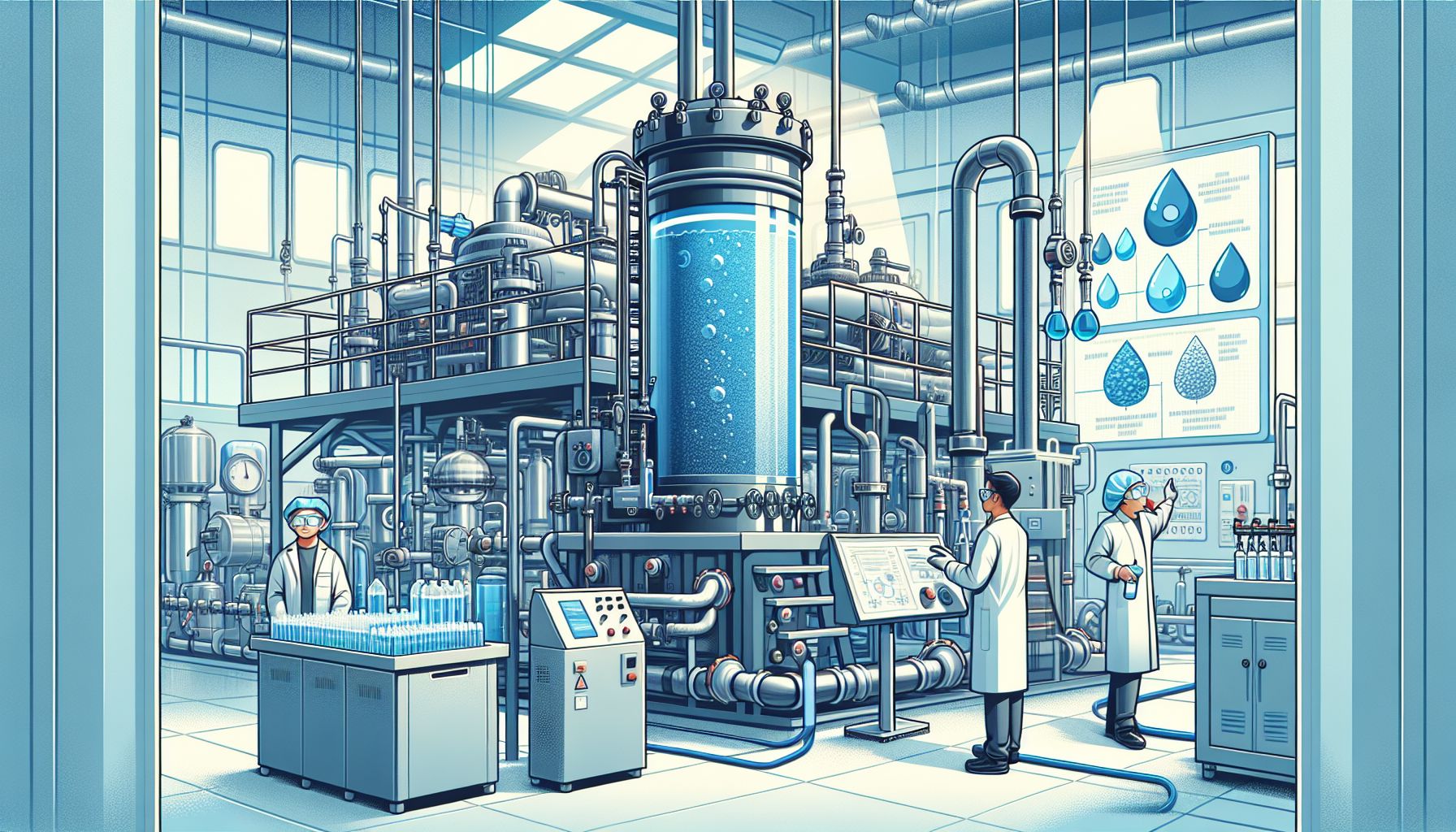
In ion exchange processes, water flows through a tank containing a specific type of synthetic resin. The water’s undesirable ions chemically bond with the resin and get replaced with the attached desirable ions. This process results in water conditioning.
Types of Ion Exchange
Ion Exchange Technology has two main types: cation exchange and anion exchange.
Cation Exchange
In Cation Exchange, positively charged ions in water, such as calcium and magnesium ions, get replaced with salt ions. The process is mostly used in softening hard water.
Anion Exchange
Anion Exchange process, on the other hand, tackles negatively charged ions such as chlorides, nitrates, and sulfates, replacing them with a simple compound like hydroxide. This method is used often in demineralizing water and removing contaminants.
Benefits of Ion Exchange Technology
Ion exchange technology has various benefits in water treatment and purification.
Enhanced Water Quality
Through ion exchange, unwanted particles and ions are removed, which leads to improved water quality.
Cost-Effective
Ion Exchange is a cost-effective method. The resin can be regenerated and reused, leading to lower operational costs.
Variety of Applications
Apart from water softening and demineralizing, Ion Exchange finds use in various other applications, like heavy metal removal and radioactively contaminated water treatment.
Drawbacks of Ion Exchange Technology
Like all technologies, Ion Exchange also has certain downsides.
Maintenance
Resins require regular regeneration, which necessitates continuous monitoring and maintenance.
Waste Production
The regeneration process generates a brine waste that requires proper disposal to avoid environmental pollution.
Applications of Ion Exchange Technology in Real-World Scenarios
Ion Exchange Technology has various practical uses. For example, it is used in the pharmaceutical industry for producing ultrapure water. Treatment plants also use it for potable water purification, preventing pipe scaling and making water more palatable. The technology also plays a significant role in industrial wastewater treatment, removing toxic heavy metals and other impurities.
For example, a significant amount of Cornell engineering research focuses on enhancing Ion Exchange Technology, developing more efficient resins, and minimizing waste production.
In summary, Ion Exchange Technology is a powerful tool in the field of water treatment and conditioning. Its ability to exchange undesirable ions with preferable ones allows for highly effective purification and conditioning of water for diverse applications. Despite its drawbacks in maintenance and waste production, its pros in enhanced water quality, cost-effectiveness, and diversity of applications prove it to be a valuable technology in addressing critical water quality concerns.
Comments are Disabled